For my first misinformation education tool, I used RumorGuard, a resource created by the News Literacy Project. RumorGuard is designed to help people recognize misinformation by examining viral claims and explaining why they are false, misleading, or lacking important context. Instead of simply telling users what information is true or false, RumorGuard teaches them how to evaluate information for themselves. It focuses on five important factors: source, evidence, context, reasoning, and authenticity. I found this approach useful because it provides a simple way to slow down and question information before accepting or sharing it online.
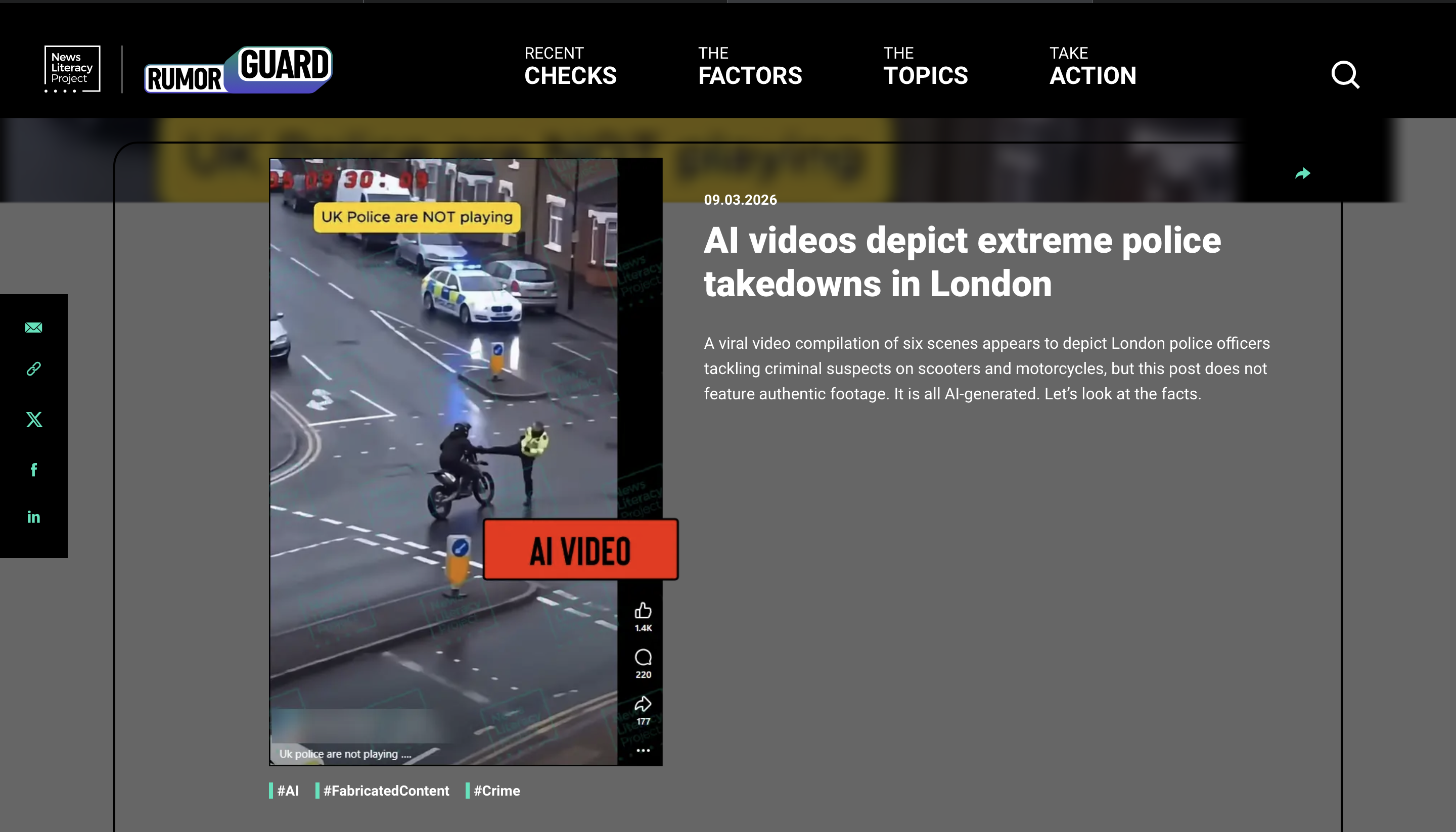
Screenshot of RumorGuard showing an AI-generated video falsely presented as real footage of London police.
Using RumorGuard taught me that misinformation can be difficult to recognize because it is often presented in ways that make it seem believable. One of the most important things I learned was that I should not immediately trust something just because it has a picture, video, or a large number of people sharing it. RumorGuard showed me how important it is to look at the source, evidence, context, reasoning, and authenticity before deciding whether information is trustworthy. I also learned that manipulated or AI-generated content can make false claims appear much more realistic. Overall, RumorGuard taught me to slow down before sharing information and to ask questions about where the information came from, what evidence supports it, and whether the content has been changed or taken out of context.
For my second misinformation education tool, I played Fake It to Make It, an interactive game that puts the player in the role of someone creating and spreading fake news for profit. Instead of simply explaining how misinformation works, the game allows players to experience the process themselves by creating websites, publishing articles, attracting readers, and trying to make money. The game also shows how emotional content, political division, and misleading information can attract attention and encourage people to share stories. I found this approach interesting because it helped me understand that misinformation is not always created just to convince people of a certain belief; sometimes, it can be created because there is a financial incentive to get more views, likes, and shares.
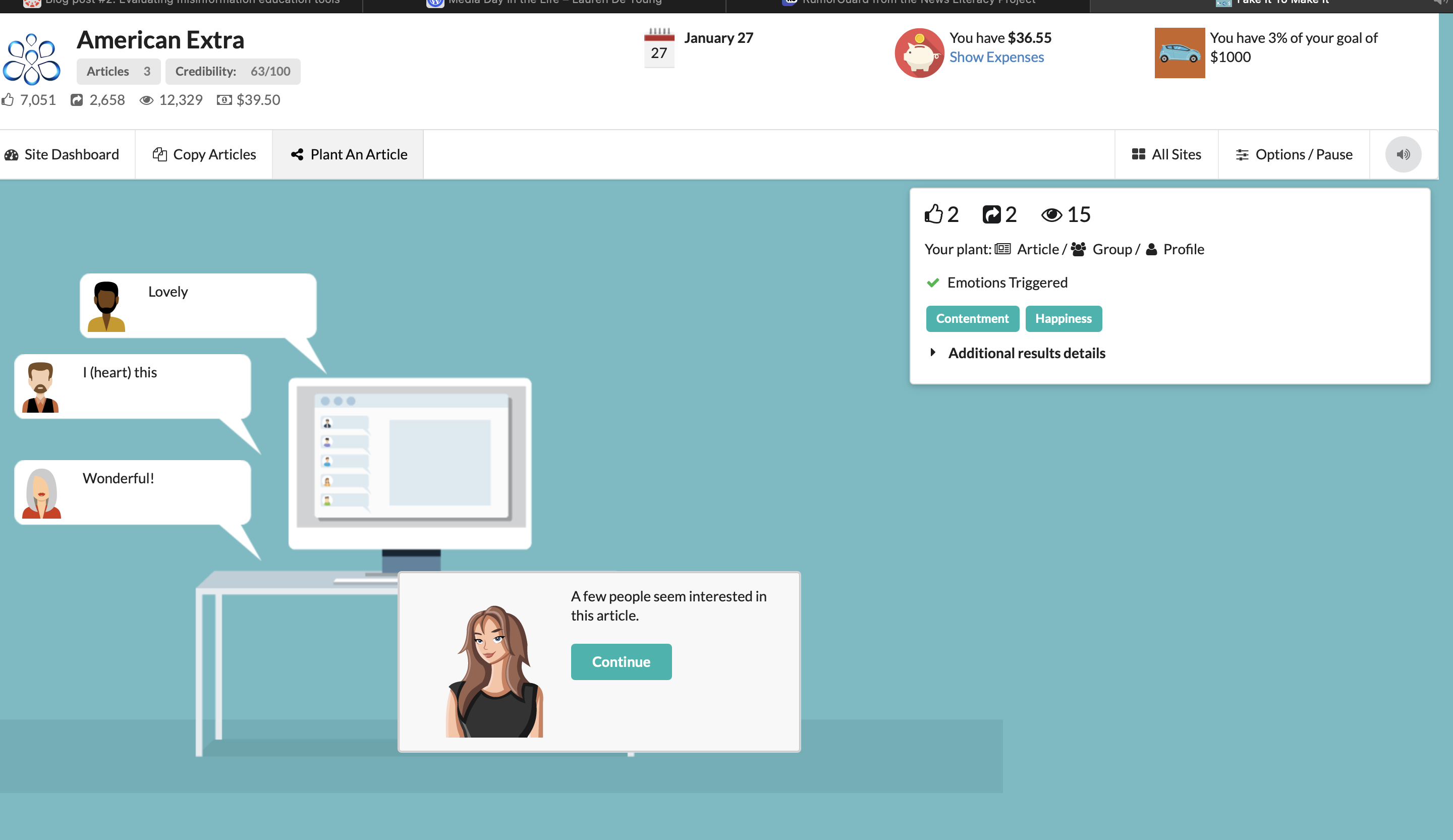
Screenshot of expoiloting unaware Americans spreading misinformation
Fake It to Make It taught me that misinformation can spread for many reasons, especially money, attention, and online engagement. One of the biggest things I learned was that fake news does not always have to be believable to become successful. Emotional or controversial stories can attract clicks and encourage people to share information without checking whether it is true.
The game also showed me how easily creators can take advantage of people’s emotions and existing beliefs. By using attention-grabbing headlines and targeting certain audiences, misinformation can reach more people and generate more engagement.
After playing Fake It to Make It, I became more aware of the reasons behind the content I see online. Instead of immediately reacting to or sharing a story, I should consider who created it, whether the source is trustworthy, and what the creator might gain from getting my attention.
Sources:
Rumor Guard https://www.rumorguard.org/tag/Unfounded
Fake it to make it: https://www.fakeittomakeitgame.com/play/site/cv3rh0pl/share


Leave a Reply